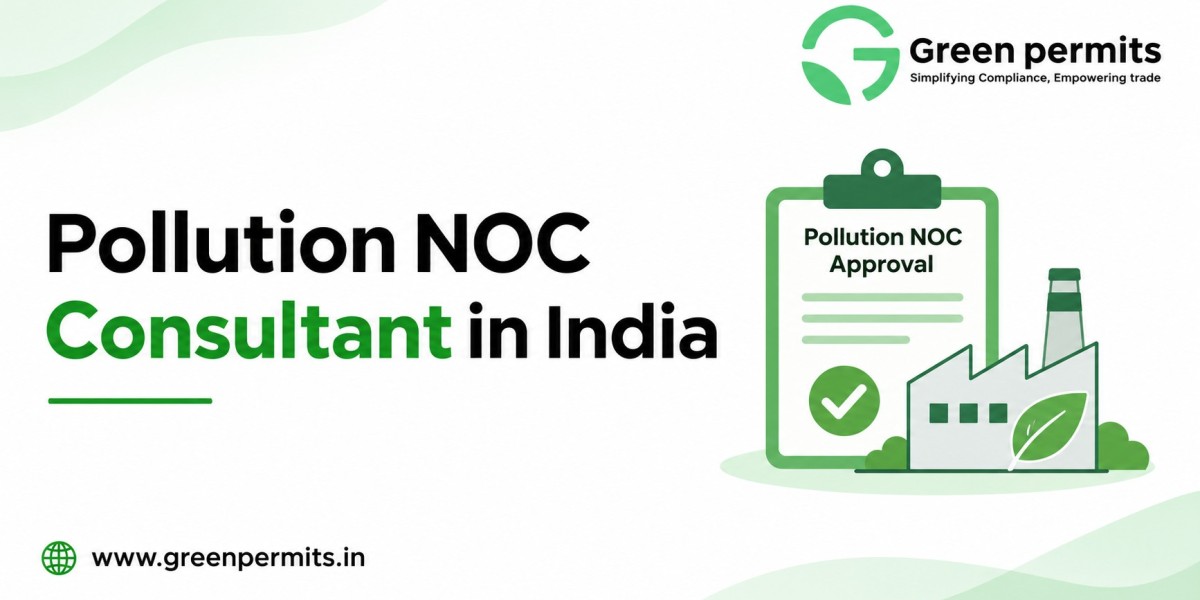

A Pollution NOC Consultant in India helps industries, manufacturers, recyclers, warehouses, and project developers obtain the environmental permissions required from the relevant State Pollution Control Board (SPCB) or Pollution Control Committee (PCC).
The term “Pollution NOC” is commonly used by businesses for approvals such as Consent to Establish (CTE) and Consent to Operate (CTO). Depending on the activity, additional waste authorisations, registrations, or environmental approvals may also be required.
The important point is that pollution compliance should be planned before machinery is installed or commercial operations begin.
Green Permits Consulting supports businesses with pollution NOC applicability assessment, CTE, CTO, environmental licensing, waste authorisations, plant-layout review, pollution-control planning, and complete SPCB/PCC compliance support.
What is a Pollution NOC?
A Pollution NOC is a commonly used business term for permissions issued by pollution-control authorities before an industrial activity is established or operated.
For many projects, the basic compliance sequence is:
Site Selection → Consent to Establish → Plant Setup → Pollution-Control Systems → Consent to Operate → Commercial Operations
The exact approval requirement depends on the nature of the industry, location, production process, capacity, raw materials, emissions, wastewater, and waste generation.
A consultant should therefore first determine which approvals apply instead of preparing a generic application.
Consent to Establish
Consent to Establish, or CTE, is generally relevant before setting up or expanding an applicable industrial unit.
The application may include details such as:
Site → Manufacturing Process → Capacity → Raw Materials → Water Use → Wastewater → Air Emissions → Waste
The proposed pollution-control systems should also be explained.
For example, a manufacturing plant may need to describe effluent treatment, air-pollution-control equipment, waste-storage areas, and water-recycling arrangements.
The CTE stage is important because it establishes the approved framework for the project.
Consent to Operate
Consent to Operate, or CTO, generally becomes relevant after the plant has been installed and before regular commercial operations begin.
At this stage, the pollution-control authority may review whether the actual plant broadly matches the approved project.
The comparison may include:
Approved Capacity vs Installed Capacity
Approved Process vs Actual Process
Approved Machinery vs Installed Machinery
Approved Pollution Control vs Actual System
If the plant differs significantly from the approved setup, clarification or modification may be required.
This is why CTE and CTO should be planned as connected stages rather than separate applications.
Who Needs Pollution NOC Support?
Pollution-control approvals may apply to many types of businesses, including:
Manufacturing Units
Recycling Plants
Chemical and Process Industries
Food and Packaging Units
Metal Processing Facilities
Waste Management Facilities
Engineering Plants
Warehouses with Applicable Activities
The exact requirement depends on the project and state-specific pollution-control framework.
Businesses should assess applicability before signing major machinery contracts or starting construction.
Pollution Category of an Industry
Industrial activities are commonly classified into pollution categories such as Red, Orange, Green, or White, depending on the applicable regulatory framework.
The category can affect the type of consent process and compliance requirements.
However, classification should not be assumed only from the company name.
The correct assessment should review:
Activity → Process → Capacity → Fuel → Emissions → Wastewater → Waste
State-specific classifications can differ, so the relevant SPCB/PCC requirements should be checked for the actual project location.
Step 1: Review the Proposed Activity
The first step is understanding exactly what the business plans to do.
A consultant should review:
Product → Production Capacity → Process Flow → Machinery → Raw Materials → Utilities
This helps identify the pollution sources associated with the project.
A simple activity description such as “plastic unit” is usually not enough because plastic moulding, washing, recycling, extrusion, and chemical processing can have very different environmental profiles.
Step 2: Assess the Site
Site selection can directly affect pollution approval.
The project should consider:
Land Use → Industrial Zoning → Neighbouring Activities → Road Access → Water → Power → Waste Disposal
For projects involving emissions, wastewater, hazardous materials, or recycling activities, location becomes particularly important.
A technically strong project can still face delays if the selected site is unsuitable for the proposed industrial activity.
This is why pollution-compliance review should ideally begin before land is finalised.
Step 3: Prepare the Manufacturing Process
The process flow is one of the most important parts of a pollution NOC application.
A practical process flow may look like:
Raw Material → Processing → Finished Product → Waste / Emission / Wastewater
Each major process step should identify the environmental output.
For example:
Washing → Wastewater
Boiler → Air Emissions
Production → Process Waste
This helps determine which pollution-control systems are required.
Step 4: Prepare the Water Balance
Industries using water should prepare a realistic water balance.
A basic structure is:
Fresh Water → Process / Domestic Use → Wastewater → Treatment → Reuse / Disposal
The application should clearly explain how much water is required and where it will go after use.
For projects with industrial effluent, the design of the Effluent Treatment Plant (ETP) may become an important part of compliance planning.
Water consumption should not be estimated casually because it affects both project design and environmental approval.
Step 5: Identify Air Emissions
Factories using boilers, furnaces, DG sets, dryers, reactors, or other emission-generating equipment should identify the relevant sources.
The assessment may follow:
Equipment → Fuel → Emission → Pollution-Control System → Stack
Depending on the process, the plant may require dust collectors, scrubbers, filters, or other pollution-control equipment.
The correct system should be selected based on the actual source rather than simply adding equipment to satisfy documentation.
Step 6: Plan Waste Management
Waste generated by the plant should be identified before operations begin.
This may include:
Process Waste
Hazardous Waste
Sludge
Used Oil
Recyclable Scrap
General Waste
Each waste stream should have a defined handling route.
A simple structure is:
Waste Type → Quantity → Storage → Recycler / Disposal Route
Where regulated waste is generated, separate authorisation or registration requirements may apply.
Documents for Pollution NOC
The exact documents depend on the state, industry, and approval type.
Typical project information may include:
Company Details
Land / Site Documents
Factory Layout
Manufacturing Process
Machinery Details
Raw Materials and Products
Water Balance
Wastewater Details
Air Emission Details
Pollution-Control Systems
Waste Management Plan
The most important requirement is consistency.
The capacity, process, machinery, water use, and waste generation should align across the application and project documents.
Pollution NOC for New Factories
New factories should integrate pollution compliance with plant planning.
The preferred sequence is:
Site → Process → Capacity → CTE → Machinery → Pollution Controls → CTO
If machinery is purchased first and environmental requirements are checked later, the company may need to modify the layout or install additional systems.
Early planning can therefore reduce both compliance risk and unnecessary capital expenditure.
Pollution NOC for Existing Industries
Existing units may need support for CTO renewal, expansion, process modification, or capacity increase.
The review should compare:
Existing Approval → Current Operation → Proposed Change
If production capacity has increased or new machinery has been installed, the pollution-control implications should be assessed before further expansion.
A consultant can help identify whether amendments, fresh consent, or additional approvals may be required.
Pollution NOC for Recycling Plants
Recycling plants often require more detailed compliance planning because they handle waste as an input.
Depending on the waste stream, the project may need:
CTE → Plant Setup → CTO → Applicable Recycler Registration / Authorisation
For e-waste, plastic waste, battery waste, used oil, tyre waste, or other regulated materials, waste-specific compliance may also apply.
The pollution NOC should therefore be integrated with the broader recycling-plant approval roadmap.
Common Pollution NOC Mistakes
One common mistake is starting construction without checking CTE requirements.
Another is submitting unrealistic water, waste, or emission data simply to complete the application.
Businesses may also face problems because the plant layout, machinery list, and manufacturing process do not match each other.
A stronger approach is:
Site Review → Process Review → Pollution Assessment → CTE → Installation → CTO
This helps ensure that the environmental approvals reflect the actual plant.
How a Pollution NOC Consultant Helps
A professional Pollution NOC Consultant in India helps businesses understand which pollution-control approvals apply and prepares the project for compliance.
The consultant can support:
Applicability Assessment → CTE → CTO → Layout Review → Water Balance → Emission Planning → Waste Management → Ongoing Compliance
The objective is not only to file an application.
The objective is to ensure that the proposed factory, pollution-control system, and approval documents remain aligned.
How Green Permits Helps with Pollution NOC
Green Permits Consulting supports manufacturers, recyclers, entrepreneurs, and industrial businesses with Pollution NOC, Consent to Establish, Consent to Operate, environmental licensing, waste authorisations, plant-layout review, pollution-control planning, and compliance documentation.
We can also integrate pollution approvals with DPR preparation, recycling plant setup, machinery planning, and project implementation so that regulatory requirements are considered before major investment decisions are finalised.
Learn More About Pollution NOC
Pollution NOC planning should begin before plant installation. Early review of the site, manufacturing process, water balance, emissions, waste, and pollution-control systems can reduce approval delays and avoid expensive modifications later.
Read more about plant setup and environmental licensing services here:
https://www.greenpermits.in/08/pollution-noc-consultant-in-karnataka-for-industries/
? Get Expert Assistance from a Pollution NOC Consultant in India
If you need a Pollution NOC Consultant in India, Green Permits Consulting can assist with CTE, CTO, environmental approvals, waste authorisations, plant-layout review, pollution-control planning, and complete SPCB/PCC compliance support.
? Website: www.greenpermits.in
? Phone: +91 78350 06182
? Email: wecare@greenpermits.in